Blackjack Rule Variations Across the Atlantic: Examining UK and US Casino Practices
Written by Freya Patterson · Sep 7, 2026

Blackjack Rule Variations Across the Atlantic: Examining UK and US Casino Practices
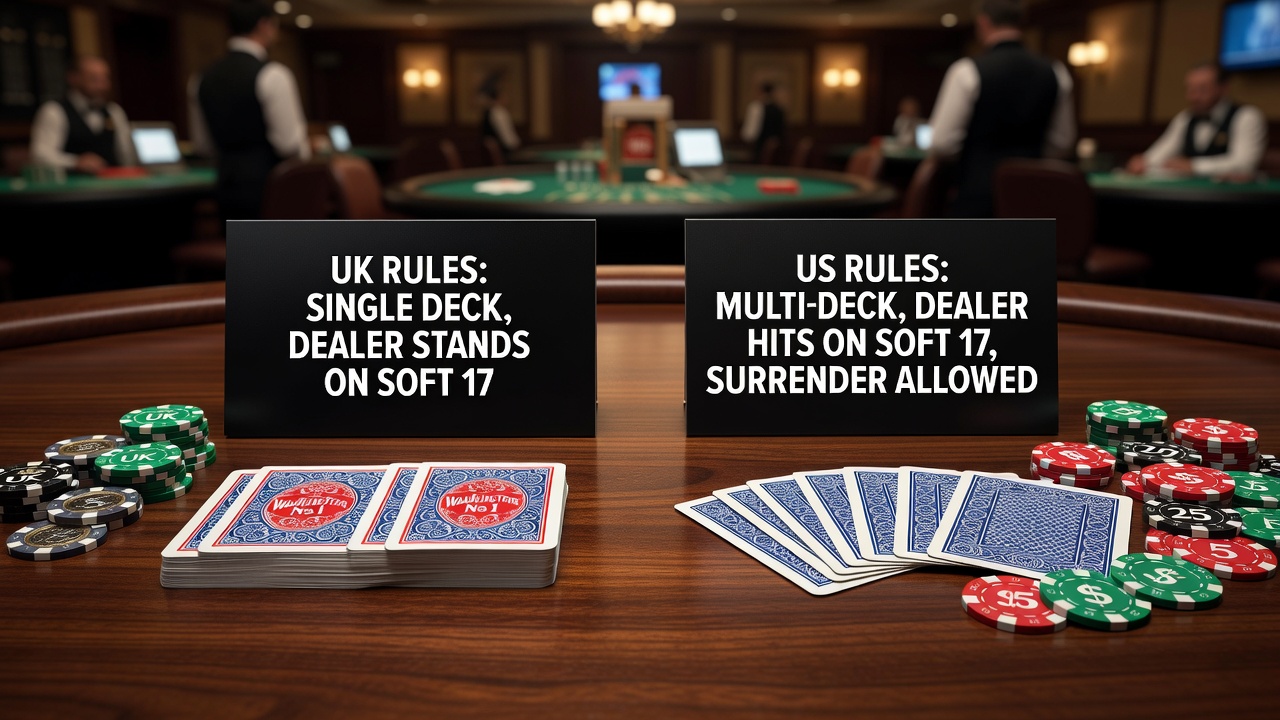
Blackjack rules show clear distinctions between UK and US casinos, particularly around the timing of the dealer’s second card and the resulting effects on player decisions. The no-hole-card approach common in UK venues requires the dealer to complete the second card only after all players finish their hands, whereas US tables typically involve the dealer receiving both cards upfront with one kept face down. These procedural differences shape how doubles, splits, and insurance bets unfold during each round.
Core Rule Distinctions in Practice
Under the no-hole-card system, players face added exposure when they double down or split because the dealer might later reveal a natural blackjack that voids those wagers after the fact. US hole-card procedures let the dealer check for blackjack immediately, which prevents such wasted actions and keeps the flow more contained. Observers note that this single timing shift alters risk calculations for every participant at the table, and it influences how often players choose aggressive moves versus conservative stands.
Data from industry comparisons indicate that UK tables enforce stricter sequencing to maintain oversight, while many US jurisdictions allow the dealer more flexibility in early verification steps. Those who study table dynamics point out that the UK method extends the window during which player choices remain open, creating a different rhythm of interaction between participants and staff.
Strategy Adjustments and Risk Assessment
Players adapting between regions must recalibrate basic strategy charts to account for the no-hole-card exposure, especially on hard totals of 11 or paired hands that invite splits. Research into decision frequencies shows higher rates of declined doubles in UK settings because the uncertainty persists until the dealer finishes the round. In contrast, US tables permit more confident doubling once the hole card check occurs, reducing the chance of lost bets on invalid moves.
One documented case involved a series of sessions where experienced players tracked outcomes across both rule sets; results revealed measurable shifts in expected value when the same starting hands faced each procedure. Casino oversight teams in both markets monitor these patterns to ensure consistent application of local regulations, and they adjust surveillance protocols accordingly.
Casino Oversight and Player-Dealer Interactions
UK venues often maintain a measured pace that stems directly from the delayed second card, allowing dealers more time to confirm actions before proceeding. This structure supports detailed record-keeping for each decision point. US operations, by comparison, emphasize quicker resolution through immediate hole-card verification, which streamlines table management and reduces disputes over timing.
According to reports from the Nevada Gaming Control Board, American casinos document fewer procedural interruptions once the hole card is checked, whereas international analyses from the Australian Gambling Research Centre highlight how sequenced dealing in other markets supports transparency. Player-dealer conversations tend to stay focused on hand outcomes rather than rule clarifications, and staff training programs address these regional variations explicitly.
Atmosphere and Gameplay Flow
UK casinos frequently cultivate a deliberate environment where the extended dealing sequence encourages measured conversation among participants. US floors, with their faster verification steps, produce a brisker tempo that suits higher-volume play. These environmental qualities arise from the underlying card procedures rather than separate design choices, and they affect how long individual sessions typically last.
Figures from cross-market reviews show consistent differences in rounds completed per hour, with the no-hole-card method extending average table time. Those who track operational metrics note that oversight remains uniform across both systems, yet the interaction patterns between players and dealers diverge noticeably once the second card timing changes.
Conclusion
The contrast between UK no-hole-card rules and US hole-card practices continues to define distinct blackjack experiences on either side of the Atlantic. Procedural sequencing influences strategy choices, risk exposure, oversight methods, and table atmosphere in measurable ways, while regulatory frameworks in each region enforce compliance with their respective standards. Players and operators alike navigate these established differences through adapted approaches that reflect local requirements.